

Lake Manyara National Park

Lake Manyara National Park, a vibrant 330 km² gem in Tanzania’s Arusha Region, nestles beneath the Rift Valley escarpment, blending a shallow soda lake (230 km²) with lush groundwater forests and acacia woodlands. Established in 1960, it’s famed for its tree-climbing lions, Tanzania’s largest elephant herds, and over 400 bird species, attracting 100,000 visitors yearly. Unlike Lake Natron’s caustic flamingo haven, Manyara’s alkaline lake supports flamingos, hippos, and 4/5 Big Five (no rhinos), connected to Tarangire via the Kwa Kuchinja Corridor. Conservation fees ($60/adult, 2025) protect its high biomassone of Africa’s richest. Best June-October for wildlife density; November-May for lush birding. Accessible via northern gate (2 hours from Arusha, $100-150 4×4) or Lake Manyara Airstrip (~$150-250 pp), it offers canoe safaris and Tanzania’s only night drives. Manyara’s intimate ecosystems deliver a serene yet thrilling safari, contrasting Natron’s stark solitude, captivating eco-travelers, birders, and families with its lush, lion-filled wilderness.
Wildlife Highlights: List

best wildlife Experience

Recommended Journeys

Experiences

Accommodations

Adventure Type

Suggested Trips

Our Top Tanzania Adventures Currently

This 7-day green season safari is a perfect getaway during the wet months of Tanzania: November, December, April, and May....

7 Days

This is a great adventure covering the most popular spots of Tanzania’s Northern Circuit. From the towering baobabs watching over...

10 Days

Experience the wonders of Tanzania's breathtaking landscapes without breaking the bank. This camping safari is meant to fully immerse you...

7 Days

Would you like to experience the best days of your life while celebrating your marriage? The Tanzania honeymoon safari with...
11 Days

Experience the main attractions of the northern circuit of Tanzania for 3 days and 2 nights whilst on safari. This...

3 Days

Go on a 6-day safari through Northern Tanzania. The adventure kicks off in Tarangire N.P. which features ancient baobab trees...

6 Days

Recommended Type of Accommodation 

Your ideal hotel in Lake Manyara national park

luxury (1)

Luxury Lodges

The Manor at Ngare Sero a lavish colonial-style estate on the park’s edge
exteriors-outdoors-buildings-structures-landscapes-2024-10-21-18-04-32-utc

Tented Camps: Luxury

Chem Chem Safari Camp Intimate and eco-luxurious with just six tents
tropical-paradise-2024-11-27-16-50-25-utc

Mid Range Camps and Lodges

Serena Safari Lodge Set amid lush grounds with lake views
family-tent-setup-at-campsite-in-caravan-holiday-p-2025-01-08-02-57-57-utc

Budget Camping

Manyara Wildlife Safari Camp self-camping options
architectural-interiors-indoors-spaces-rooms-kenya-2024-10-18-09-47-37-utc

Mobile Tented Camps

Wayo Manyara Green Cam deep inside the park

Recommendation

Beyond Lake Manyara Tree Lodge

About lake manyara

All you want to know about Lake Manyara National Park

Start at 6:00 AM with a sunrise game drive from &Beyond Tree Lodge, spotting tree-climbing lions draped over fig branches as golden light filters through the canopy. By 9:00 AM, enjoy breakfast on your private deck overlooking a hippo pool, hornbills calling overhead. At 11:00 AM, join a guided forest walk with a Maasai tracker to Maji Moto hot springs, learning how elephants dig wells and identifying fresh leopard tracks. Picnic at 1:00 PM beneath fever trees as giraffe browse nearby. If water levels allow, canoe the lake at 4:00 PM, gliding silently past submerged hippos and flocks of pelicans. End with a 6:30 PM sundowner on the escarpment rim, toasting as two million flamingos turn the horizon rose-gold. Dinner at 8:00 PM is starlit in the bush

 grilled warthog, Tanzanian

Lake Manyara offers an adventure menu for every traveler. Game drives (morning, afternoon, or full-day with picnic) traverse all zones, revealing elephants at 20 meters and lions draped over branches. Night game drives on private concessions like Chem Chem spotlight leopards, genets, and porcupines under floodlights. Walking safaris with armed guides and Maasai trackers explore the forest on foot, teaching spoor reading and medicinal plants. Canoeing on the lake (when water levels permit) glides past hippos and waterbirds in serene silence. Hot-air balloon safaris launch at dawn over the floodplain, landing with champagne breakfast amid acacias. Cultural visits to Mto wa Mbu village showcase banana beer brewing, rice farming, and vibrant markets. Bird walks at Maji Moto hot springs tally 50+ species in two hours. From adrenaline to tranquility, activities cater to families, photographers, and thrill-seekers alike

Lake Manyara’s five distinct ecological zones create a visual and wildlife mosaic. The groundwater forest along the northern edge is a lush cathedral of ancient mahogany, fig, and tamarind trees, nourished by underground springs from Ngorongoro Highlands; here, hot springs steam and tree-climbing lions nap in the branches. The soda lake dominates the center, its alkaline waters shrinking to a glittering crust in dry season but expanding to host flamingo nurseries in the rains. Acacia woodland with yellow-barked fever trees stretches across the east, home to giraffe and impala. The grass floodplain near the Msangai River features hippo pools and open plains perfect for balloon safaris. Finally, the Rift Escarpment rises 600 m like a sheer wall, offering panoramic lookouts from rim lodges and framing sunsets that turn the lake molten gold. Each zone transitions within minutes, delivering constant variety.

Lake Manyara’s wildlife is legendary for its density and diversity. It hosts Africa’s highest elephant biomass—over 300 individuals in family herds that dig waterholes with their tusks. The park’s signature tree-climbing lions (best seen November–May) lounge in sausage trees to escape heat and tsetse flies, a behavior unique to this region. Buffalo, giraffe, zebra, and wildebeest roam the grasslands, while hippos wallow in permanent pools. Leopards prowl the forest at night, and primates blue monkeys, olive baboons, and vervet monkeys—create a constant canopy symphony. Birdlife is spectacular: over 400 species include up to two million flamingos (greater and lesser) forming a shimmering pink carpet on the soda lake during wet months. Pelicans, storks, cormorants, African fish eagles, and rare palm-nut vultures add to the avian spectacle, making dawn bird walks at Maji Moto springs a highlight for twitchers.

Reaching Lake Manyara is seamless from multiple hubs. By road, it’s 126 km west of Arusha on smooth tarmac (A104) via Makuyuni to Mto wa Mbu—about 1.5–2 hours by safari vehicle. By air, Lake Manyara Airstrip (10 minutes from gate) welcomes daily scheduled flights from Arusha (30 min), Serengeti, or Zanzibar via operators like Coastal Aviation or Regional Air. Safari circuits often slot Manyara as a day trip from Arusha or a two-night stop en route to Ngorongoro (1.5 hrs) and Serengeti (4 hrs). Self-drivers follow clear signage from the main highway; 4WD is recommended but not essential on dry-season roads. Flying in saves time for those combining with Tarangire (1 hr away) or extending to Zanzibar. All routes converge at the single Mto wa Mbu Gate for entry formalities.

Wildlife in Lake Manyara National Park

Lake Manyara hosts Africa’s densest elephant population over 300 individuals in tight-knit herds that dig life-saving waterholes with their tusks during dry months. Signature tree-climbing lions (unique to this region) lounge in sausage and fig trees to escape heat and tsetse flies, offering photographers dream shots from November to May. Buffalo, giraffe, zebra, and wildebeest graze the floodplains, while hippos wallow in permanent pools. Leopards stalk silently in the groundwater forest, best seen on night drives in private concessions. Primates abound: blue monkeys swing through mahogany canopies, olive baboons raid picnics, and vervets chatter constantly. The soda lake attracts up to two million flamingos in wet season, turning the horizon pink alongside pelicans, storks, and fish eagles. Over 400 bird species make it a twitcher’s paradise

lions-rests-in-tree-a-hot-day-at-serengeti-2025-03-11-02-17-35-utc

Tree-climbing Lions

20–30 individuals master the art of lounging 6 m up in sausage and fig trees to escape heat and tsetse flies.

Elephant

Over 300 strong, these gentle giants form tight family herds and use tusks to dig waterholes up to 2 m deep in dry riverbeds

giraffe-moremi-reserve-botswana-2025-04-05-03-11-54-utc

Giraffe

Masai giraffe stride elegantly through fever-tree woodlands

Zebra

Striped herds of 500+ gallop in dazzling patterns across open grasslands

vervet-monkey-chlorocebus-pygerythrus-at-el-kara-2024-09-12-02-45-08-utc

Monkey

Small, black-faced bands chatter incessantly in groundwater forest, stealing fruits and snacks with lightning speed.

a-close-up-portrait-of-a-male-leopard-panthera-pa-2025-04-04-08-33-11-utc - Copy

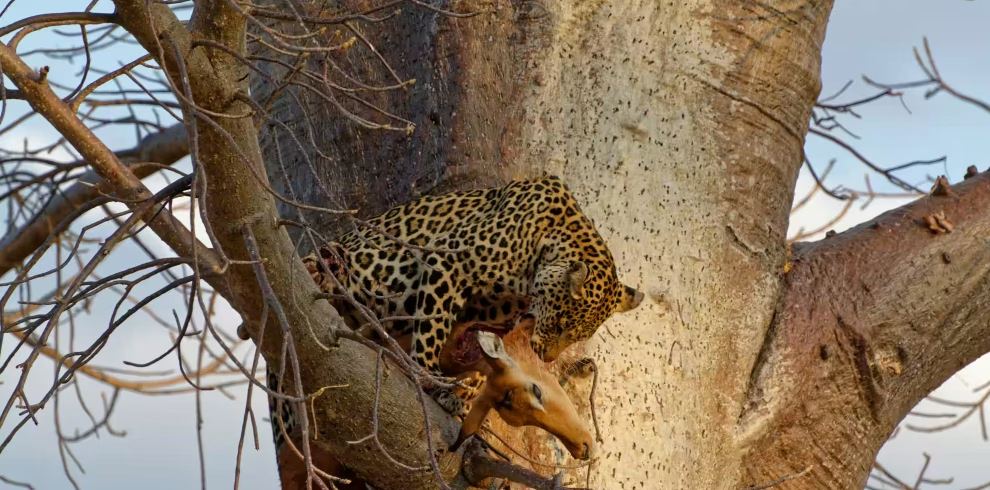
Leopard

, dragging kills into trees away from hyenas. Night drives on private concessions offer the best (and rarest) sightings

hippo-family-kenya-africa-2025-03-26-03-28-53-utc

Hippopotamus

200 hippos crowd permanent pools, emerging at dusk to graze 5 km from water.

flamingo-in-bolivia-2025-01-09-05-19-51-utc

Greater & Lesser Flamingo

Up to 2 million birds turn the soda lake bubble-gum pink from November–March, filter-feeding on algae in synchronized flocks

majestic-eagle-soars-gracefully-through-the-sky-ab-2025-02-09-01-52-38-utc

Fish Eagle

Iconic white-headed raptors perch on dead trees, issuing haunting cries before plunging for fish.

TALK WITH A SPECIALIST

Get in touch with our Travel Specialists to start crafting your custom vacation.

Reach out to our expert by phone or book a video consultation for ideas and professional advice.

CALL US AT +255 626 059 209